
In partnership with

Thursday News Edition
ChatGPT Just Got 70 Adobe Tools
To everyone watching AI agents turn from chat windows into full platforms: this week was one of those weeks where the pattern got louder.
Adobe moved more than 70 creative and document tools into ChatGPT, Vercel opened v0 through an API, Meta entered the coding-agent race with Muse Code, Cursor added Google Workspace plugins, and Agent Plugins started looking like a real packaging standard for skills, tools, and MCP servers.
Also: the Toolfolio Discord is open. Share your tool, find early users, swap workflows, or hang out with other builders here: Join the Toolfolio Discord
Here’s what’s inside:
Top Story → Adobe brings Photoshop, Firefly, Acrobat, Express, Premiere, Lightroom, Illustrator, InDesign, Stock, and more into ChatGPT
Builder Platforms → Vercel launches the new v0 API
AI Coding → Meta launches Muse Code with Muse Spark 1.2
Workflow Tools → Cursor plugins connect Gmail, Drive, and Calendar
Agent Ecosystem → Agent Plugins package skills, tools, and MCP servers into a portable standard
→ But first, check out today’s sponsor to support our newsletter 👇
Domain Names + Web and Email Hosting Done Right

Tired of overpaying GoDaddy or Namecheap? There's a smarter option with Porkbun!
Porkbun is the domain registrar trusted by creators, developers, entrepreneurs, and anyone who wants low prices without the nonsense or the forced upsells.
Here's why so many people are making the move to the Bun:
• Most domains sold at cost
• Low, transparent registration and renewal pricing
• Free features like WHOIS privacy and SSL certificates
• Powerful web and email hosting options
• Real human support 24/7, 365 days a year
• Named the #1 domain registrar by Forbes Advisor and USA Today
Whether you're launching a business, building a personal brand, starting a side project, or creating your very first website, Porkbun makes the whole thing easy.
CREATIVE AI
ChatGPT Just Got 70 Adobe Tools
1/5
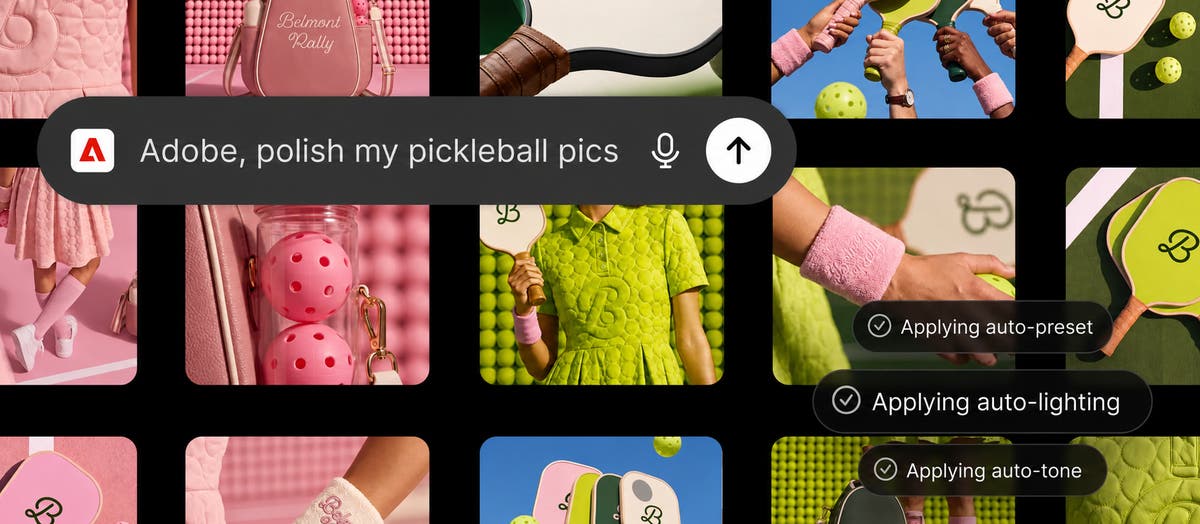
Adobe launched Adobe for ChatGPT, a plugin that brings more than 70 pro-grade Adobe tools directly into ChatGPT.
The list includes Photoshop, Firefly, Acrobat, Adobe Express, Premiere, Lightroom, Illustrator, InDesign, Stock, and more. The goal is simple: let people brainstorm, create, edit, format, and finish creative work without bouncing between a chatbot and a stack of separate apps.
This is a big signal for where creative software is heading. ChatGPT is not just answering questions here. It is becoming the surface where users ask for the work, and Adobe becomes the tool layer that actually edits images, videos, designs, PDFs, and documents.
For builders, the interesting part is the platform shift. The winning creative tools may not only be standalone destinations. They may also need to show up inside the agent environments where people already plan and execute their work.
BUILDER PLATFORMS
Vercel Turns v0 Into an API
2/5

Vercel launched the new v0 API, giving developers programmatic access to v0’s app-building agent.
The API can take a prompt, generate an app, start a dev server inside a Vercel Sandbox, and return a preview URL that can be embedded inside another product. It also supports chat creation, synchronous or async messages, streaming updates, repo context, automated changes, and deploy flows.
This changes v0 from “a place where you go to build UI” into infrastructure that other tools can call. A SaaS product could add a white-labeled app builder. An internal platform could generate prototypes from tickets. An agent product could use v0 as its front-end generation layer.
That is very Toolfolio-native: the app-builder is becoming an API, and the next wave of tools can build on top of it instead of rebuilding the whole generation loop.
AI CODING
Meta Launches Muse Code
3/5

Meta introduced Muse Code, a terminal coding agent powered by Muse Spark 1.2.
The product is in beta, but the direction is clear: Meta wants a seat in the same coding-agent conversation as Claude Code, OpenAI Codex, Cursor, GitHub Copilot, and other agentic dev tools.
Muse Code focuses on persistent background agents, repository-scale execution, session continuity, built-in verification, and agent coordination. Meta’s post also highlights Muse Spark 1.2 improvements for code generation, debugging, and hard engineering tasks like GPU kernel optimization.
The bigger story is that the coding-agent market is no longer a few startups and model labs experimenting around the terminal. Meta is now pushing its own agent stack, which means the race around developer workflows, background execution, and verification is getting more crowded fast.
WORKFLOW TOOLS
Cursor Gets Google Workspace Plugins
4/5
Cursor’s changelog now includes Google Workspace plugins for Gmail, Google Drive, and Google Calendar.
That means Cursor can pull context from workspace files, help draft or work with emails, and interact with calendar data from inside the developer environment.
This is less flashy than a new model, but very practical. A coding agent that can understand a repo is useful. A coding agent that can also see the product doc in Drive, the customer thread in Gmail, and the deadline on the calendar starts to look more like a work agent.
It also fits the broader theme this week: tools are turning agents into platforms by giving them safer, structured access to the places where work already happens.
AGENT ECOSYSTEM
Agent Plugins Are Becoming a Standard
5/5

Google published a developer post on Agent Plugins, a vendor-neutral specification for packaging Agent Skills, tools, and MCP servers into portable plugins.
The problem is familiar to anyone building agent integrations right now: every client has its own shape for instructions, tools, manifests, MCP setup, and local capabilities. Agent Plugins tries to standardize the package, so the same capability can move across compatible agent environments more predictably.
The spec does not solve distribution or installation yet. It focuses on the manifest and package structure, which is still a meaningful layer if agent tools are going to become reusable instead of trapped inside one product.
The reason this matters: the agent ecosystem is starting to look like an operating environment. Skills, MCP servers, tools, and app-specific actions need a way to travel. Agent Plugins is one of the clearest signs that portability is becoming a real product category.
TRENDING NEWS
Tool News You Missed!
OpenAI improved GPT-5.6 Sol in ChatGPT, with better accuracy and focus plus a thought-control slider for heavier reasoning.
GPT-5.6 Luna is expanding for free users, becoming the default model with unlimited text chats and a Think button for more deliberate answers.
GitHub Copilot cloud agent added reasoning-level control, so delegated coding tasks can run with a selected model reasoning setting.
GitHub Copilot CLI keeps shipping agent workflow improvements, including worktree sessions, rewind, sandbox settings, permissions, and faster resumes.
VibeGuard 2.0 put coding-agent security in the spotlight, with guardrails for Claude Code, Cursor, Copilot, MCP, and risky developer-endpoint operations.
Vercel added support for Next.js 16.3, with improvements around prefetch requests, static assets, and path metadata serving.
OpenAI launched education plugins for ChatGPT Work and Codex, helping students and educators connect course materials and approved apps.
Join the Toolfolio Discord to share your product, find early users, discover tools, and hang out with other builders.
Toolfolio’s Monthly Sponsors

TinyFolder is designed to declutter your Mac Dock by allowing you to group frequently-used applications into custom folders, which can be accessed with a simple click.

Deck Gallery is an online platform providing a wide variety of curated presentation decks, designed for efficiency and aesthetic appeal.

Collect form submissions without writing a server
Formcarry is a form API that streamlines the process of collecting form submissions without needing backend coding, handling everything from email notifications to spam protection and file uploads.

Unlock endless design potential
A rich library of professional assets at your fingertips. High-quality UI kits, templates, illustrations, icons, and mockups.

Discover handpicked, design-focused products.
Curated Supply is a subscription service that delivers well-designed products every week

A course on the invisible details of interface design.
Invisible Details is dedicated to unveiling the hidden intricacies of interface design that elevate user experiences.

Feedzy runs your entire production from one place, ideation to publishing.
Plan and script videos, leave timestamped feedback on drafts, organize files, chat with your team, and A/B test thumbnails and titles on real traffic, then upload straight to YouTube.

AI-driven design tool for rapid prototyping and iteration.
UX Pilot is an innovative platform that streamlines web application design and prototyping using AI technology.

Melius is the agent harness for generative AI creative work. Brief your agents, and let them build out the entire workflow from prompt to production ready images and videos.
You can even build your own skills to recreate processes

Tabsurfer - Tab Management (Chrome)
Tabsurfer is a powerful browser extension that lets you organize and manage tabs effortlessly. It offers features like tab collapsing, folders, schedules, AI sharing, and is designed to make surfing the web smooth and manageable.
Perfect for users who juggle many tabs daily.
Learn more about Sponsoring Toolfolio here —> Toolfolio Boosts
Your Input is Greatly appreciated!
Did you enjoy this email?
Quicklinks:
Find the Latest Addition to Toolfolio here —> Newest Additions
Find our Dedicated Libraries of Tools here —> Libraries
20+ Coupons can be found on Toolfolio today —> View Coupon Codes
See you on the next one!
That’s all for this edition. Hopefully you found something new to spark ideas and make your workflow smoother.
Know a friend who’d love this? Forward it their way.
Got a tool worth featuring? Reply to this email
Catch you in the next drop,
— Dudu from Toolfolio
